If you are hunting for a single-family home in Woodhaven with room to build equity, you already know the challenge: the best opportunities do not always look like obvious fixer-uppers. In a market where homes tend to sell close to asking price, finding value often comes down to buying smart, planning carefully, and knowing where improvement dollars can actually pay off. This guide will help you spot practical value-add opportunities in Woodhaven, avoid common pitfalls, and make more confident decisions before you buy. Let’s dive in.
Why Woodhaven can work for value-add buyers
Woodhaven is a compact city with a strong owner-occupied housing base. Census estimates show 12,575 residents, a 74.3% owner-occupied housing rate, and a median owner-occupied home value of $231,800, which helps frame the city as a stable single-family market.
The City of Woodhaven’s 2024 Master Plan also shows how important single-family housing is locally. Detached single-family residential land accounts for 932.90 acres, or 26.63% of the city, and the plan emphasizes long-term neighborhood stability while supporting appropriate new residential development.
For you as a buyer, that matters because value-add potential usually works best in places where single-family homes remain a core part of the housing mix. It suggests that thoughtful updates can fit the market, especially when you match the home’s finish level to nearby properties.
What value-add means in Woodhaven
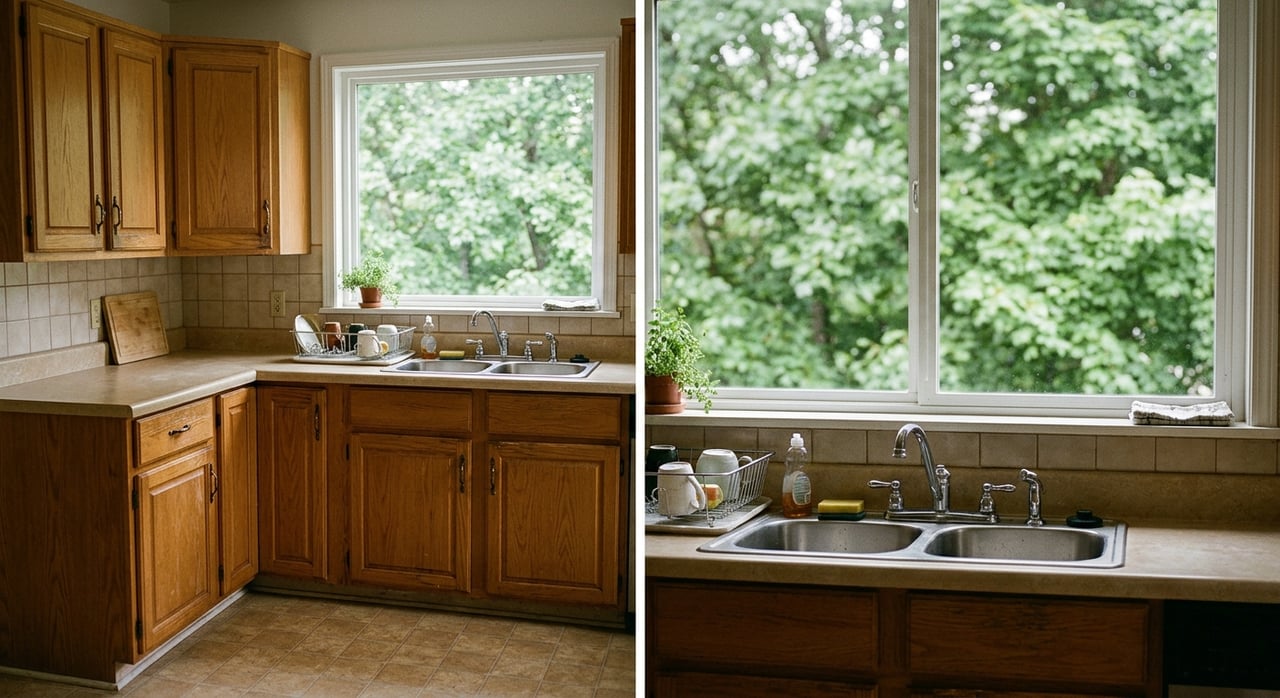
In Woodhaven, value-add does not always mean a major gut renovation. More often, it means finding a home with dated finishes, functional weaknesses, or deferred maintenance that you can improve without pushing the property beyond what nearby buyers will support.
A practical way to think about value-add projects here is in three tiers:
- Cosmetic refreshes like paint, flooring, fixtures, cabinets, countertops, and curb appeal improvements
- System-and-function upgrades such as roofing, windows, plumbing, electrical, mechanical updates, or layout improvements that make the home work better
- Larger permitted projects like additions, structural changes, or major reconfigurations
That distinction matters because Michigan requires permits before construction work that changes structural elements, egress, plumbing, electrical, or mechanical systems. Woodhaven’s permit application also requires separate applications for plumbing, mechanical, and electrical work, and most non-minor projects need plans before permits are issued.
Understand the local price band first
Before you get excited about a project house, it helps to understand Woodhaven’s current pricing. Recent public snapshots place the market in the low- to mid-$200,000s, with Redfin reporting a March 2026 median sale price of $220,000 and Realtor.com showing a December 2025 median listing price of $244,500.
Those same snapshots also suggest a relatively tight market. Redfin reported 19 median days on market and a 97.9% sale-to-list ratio, while Realtor.com showed 47 median days on market and a 98% sale-to-list ratio.
The takeaway is simple: deep discounts may be harder to find here than buyers expect. In Woodhaven, success often depends less on finding a dramatic bargain and more on keeping your renovation scope disciplined and staying within the resale ceiling supported by nearby comparable homes.
Look for homes that lag the neighborhood
Woodhaven’s Master Plan notes that some neighborhoods include smaller homes while others include newer and larger homes. That mix can create opportunity, but usually not in the way TV renovation shows suggest.
The strongest value-add candidates are often older homes that sit below neighborhood expectations in condition or finish, not homes that require extreme reconstruction. If you can buy a property that needs updating but still fits the area in size, layout, and overall appeal, you may have more room to create value without over-improving.
When you tour homes, pay attention to signs that a property is behind the market in manageable ways:
- Outdated kitchens or baths
- Worn flooring or old paint colors
- Weak curb appeal
- Original finishes in an otherwise stable area
- Functional issues that can be corrected without major expansion
These types of problems are often easier to budget for than large structural changes. They can also be more predictable from a resale standpoint.
Use comps with discipline
One of the biggest mistakes value-add buyers make is relying on broad city averages instead of true comparable homes. In Woodhaven, a useful comp set should stay close on location, square footage, bedroom and bathroom count, lot size, garage count, and renovation level.
That is especially important in a city where housing stock varies from smaller older homes to newer and larger ones. The more relevant question is not what the average Woodhaven home is worth, but what a similar finished home actually sold for.
When reviewing market data, keep the metrics straight:
- Sold price shows what buyers actually paid
- Listing price shows seller expectations
- Days on market helps you gauge demand and pricing accuracy
- Price per square foot can help, but should not be used alone
If you are planning improvements, your goal is to estimate the likely value of the home after the work is done based on realistic nearby sales. That step can protect you from spending more than the market is likely to return.
Check the paper trail before you commit
A listing description can be helpful, but it should not be your only source of truth. Wayne County’s Register of Deeds provides online access to recorded documents dating back to January 1, 1960.
Free public search is available by grantor or grantee name, and paid on-demand options expand search capabilities to address, parcel, tax ID, legal description, and Liber/Page. In practical terms, this can help you verify prior transfers, check how recently the property changed hands, and build a clearer ownership history before you move forward.
This kind of review can be especially useful if a home appears to have been recently updated, flipped, or transferred. A cleaner paper trail can give you more confidence, while inconsistencies may signal the need for deeper review.
Know the permit triggers in Woodhaven
If your value-add plan goes beyond cosmetic work, permitting becomes a big part of your risk management. Michigan allows ordinary repairs without a building permit, but permits are required before construction and for work involving structural changes, egress, plumbing, electrical, or mechanical systems.
Woodhaven adds another layer of review. The city’s building permit application includes zoning approval and checks for fire district, soil erosion, flood zone, and variance status.
That means a project that looks simple at first glance may involve site-specific issues. If you are considering a major renovation, addition, garage change, or exterior improvement, it is wise to understand those review points as early as possible.
Watch for lot and site constraints
Lot details can affect what you are able to build or change. Woodhaven’s concrete permit materials instruct applicants to submit a current plot plan, account for accessory buildings already on the lot, and verify easements.
The same materials state that construction should stay at least one foot off the easement and note that lots generally have a minimum 6-foot easement, with some side-yard easements. For buyers thinking about patios, driveways, sheds, or larger outdoor improvements, those details can affect both design and budget.
This is one reason value-add buyers should not focus only on the house itself. The lot, setbacks, and existing site features can shape what is actually possible.
The biggest risk flags to spot early
Not every discounted home is a good value-add opportunity. In Woodhaven, some of the most important red flags are tied to scope, records, and hidden condition issues.
Pay close attention to these risks:
- Unpermitted prior work that may need correction or further review
- Mechanical or structural defects that are not obvious from listing photos
- A rehab budget that exceeds local resale support
- Site constraints tied to easements, zoning, or other permit reviews
- A project plan that depends on major changes without confirmed feasibility
The best opportunities are often the ones that look more straightforward, not more dramatic. Clear scope, cleaner records, and realistic numbers usually beat a property that seems cheap but carries too many unknowns.
A smart Woodhaven value-add strategy
If you are buying in Woodhaven, a strong strategy is usually to look for a home you can improve in measured steps. Focus first on properties that can benefit from cosmetic updates or practical system improvements, then weigh larger projects only after the numbers and permit path make sense.
That approach fits the local market. With homes often trading near asking price and with a wide share of owner-occupied housing, you may see better results from thoughtful, neighborhood-aligned improvements than from trying to force a major transformation.
In other words, the goal is not just to buy a house that needs work. The goal is to buy the right kind of work at the right price in the right pocket of Woodhaven.
If you want help comparing homes, pressure-testing renovation potential, or understanding where a property fits within the local market, working with a team that knows Downriver housing patterns can make the process much easier. When you are ready for local guidance, connect with Sarah Stoner for a personalized conversation.
FAQs
What is a value-add single-family home in Woodhaven?
- A value-add single-family home in Woodhaven is usually a property you can improve through cosmetic updates, functional upgrades, or larger permitted work to better match neighborhood expectations without over-improving for the area.
How competitive is the Woodhaven housing market for buyers?
- Recent public market snapshots suggest Woodhaven is relatively tight, with homes selling close to list price and median days on market reported at 19 by Redfin in March 2026 and 47 by Realtor.com in December 2025.
Do you need permits for renovation work in Woodhaven?
- Yes, permits are required in Michigan before construction work and for projects involving structural elements, egress, plumbing, electrical, or mechanical systems, and Woodhaven also requires separate permit applications for plumbing, mechanical, and electrical work.
What should you compare when analyzing a Woodhaven fixer-upper?
- You should compare nearby homes by location, square footage, bedroom and bathroom count, lot size, garage count, and renovation level so you can estimate what a similar finished home has actually sold for.
How can you research a property’s ownership history in Wayne County?
- Wayne County’s Register of Deeds offers online access to recorded documents dating back to 1960, which can help you verify prior transfers and review the property’s recorded history.
What are the main risks with value-add homes in Woodhaven?
- The biggest risks are unpermitted work, hidden mechanical or structural issues, site limitations tied to permits or easements, and renovation budgets that push the property beyond what nearby comparable sales can support.